Prairie Power: The Hidden Strength Beneath the Surface
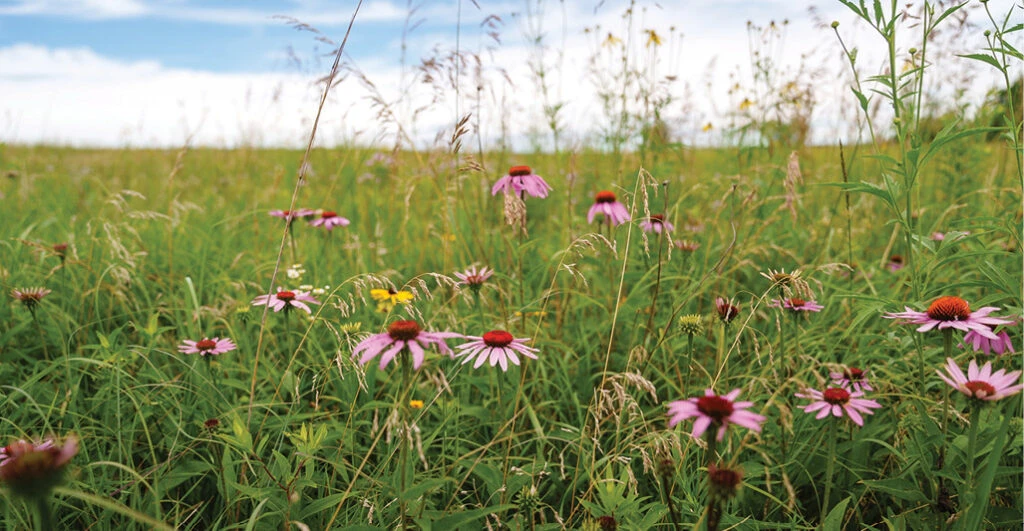
Step into a prairie ecosystem at the height of the growing season, and you’ll be overwhelmed by the sights, smells and sounds of the habitat. Brightly pigmented flowers adorn the landscape, beacons for busy buzzing insects. A breeze moves like ocean waves, bringing the earthy smell of wild grasses and flowering herbs. The horizon seems to extend forever. In the summer season, prairie ecosystems glow with life!
What Are Prairie Ecosystems?
Prairie ecosystems are dominated by grasses and wildflowers with little tree cover. Two main forces create and maintain this system: weather and disturbance.
In areas with little rainfall, trees and shrubs struggle to survive. High summer temperatures chase away cool-season grasses and flowers, creating the perfect place for prairie grasses and wildflowers to thrive. The prairie plants and their seeds are so well adapted to this environment that they even survive periods of drought by becoming dormant. Natural disturbances, like grazing from herbivores and fire, also work to eliminate trees and shrubs.
Prairie plants seem almost invincible, easily surviving harsh conditions and sudden disturbances, bouncing back even stronger. To understand their power, one has to dig a little deeper.

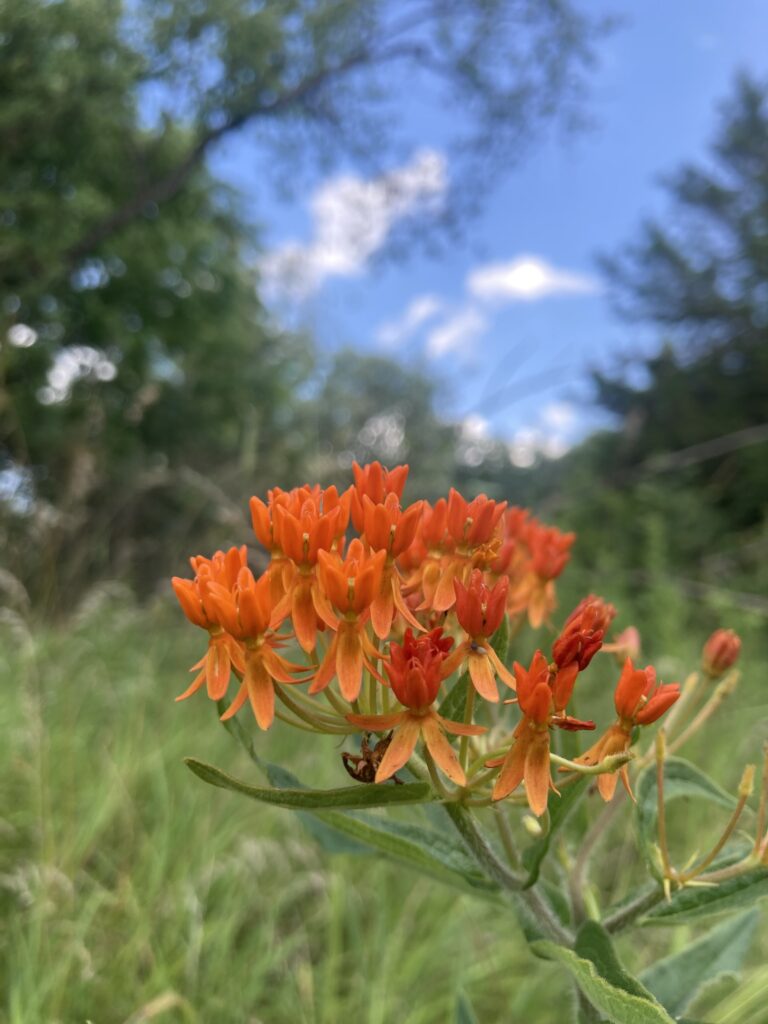
Prairie Plant Root Systems: Underground Networks
Beneath the colorful, showy exteriors, prairie grasses and wildflowers house deep root systems. With roots sometimes two or three times the size of the plant, most of a prairie ecosystem is actually underground!
By creating a strong support and storage system right below the surface, prairie plants can easily survive drought and disturbance. Prairie plants strategically place their “growing points” underground. These are the spots where new cells are developed and form into different plant parts. Hiding these points under soil allows prairie plants to bounce back quickly after cattle or bison grazing, or fire.
The web of roots beneath the surface becomes a “carbon sink,” a place that absorbs and stores more carbon from the atmosphere than it releases. Prairie ecosystems store enough carbon to be comparable to a forest! As old roots die off each year, nutrients are added back into the soil.
Prairie Management and Conservation
To keep our prairie habitat healthy, ACRES mimics natural disturbances. Mowing functions as a substitute for grazing, while our stewardship team relies on Traditional Ecological Knowledge (TEK) for burns. TEK is the accumulation of knowledge about an ecosystem that was acquired and handed down by indigenous peoples over long periods of time, through direct contact with the environment. The stewardship crew initiates controlled burns that originally would have been ignited by lightning strikes or by indigenous people groups who utilized fire for a variety of purposes. All of these disturbances keep woody plants at bay and stimulate prairie plants to grow.
Experience Prairie Ecosystems at ACRES Preserves
Want to enjoy the blooming fields this summer season? Explore trails at Wildwood, Pehkokia Woods and Greenhurst Commons. Join us for a Field Flower Hike to learn more about some of the specific plants that live in these prairie ecosystems.