
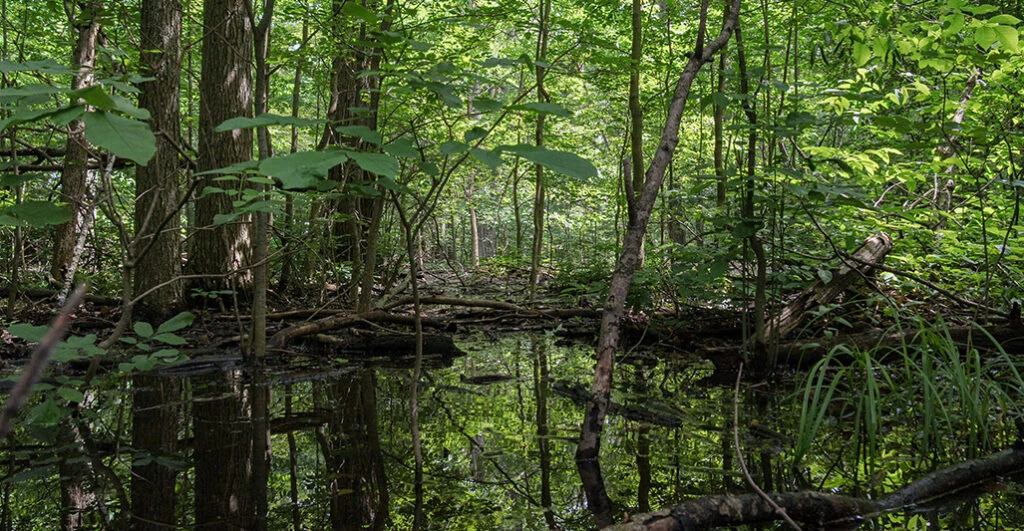
Restoring The Midwest’s Lost Wetlands
Most of the Midwest’s historic wetlands vanished before anyone considered their value. Today, with nearly 90% of those wetlands lost, protecting what remains is only part of the work ahead. We need to actively create “new” wetlands in areas where they would have occurred naturally prior to tiling and ditching.
What We Lost
Some historic wetland systems might not have even appeared to function as wetlands to those passing through by railcar in the mid-1800s, and even where they still exist today, most folks likely don’t recognize these locations as wetlands either.
Wet prairies are diverse, open wetland communities dominated by sedges, grasses and forbs. These prairies once covered large portions of our service area and were among the first areas targeted for conversion to agriculture. After being drained, their rich soils proved to be among the most productive in the state. All the while, these systems had been working behind the scenes to clean water and, in many places, recharge aquifers.
Wetlands That Survived — and Changed
Most of the wetlands we still have today are those that weren’t easily drained. Instead, it was often decided to send them additional water from nearby areas. This is why these places are easily identified by the amount of standing water they hold year-round. Historically, many were high-quality bogs and fens, but now they function more as buttonbush swamps. Still valuable habitat, but certainly not the same.
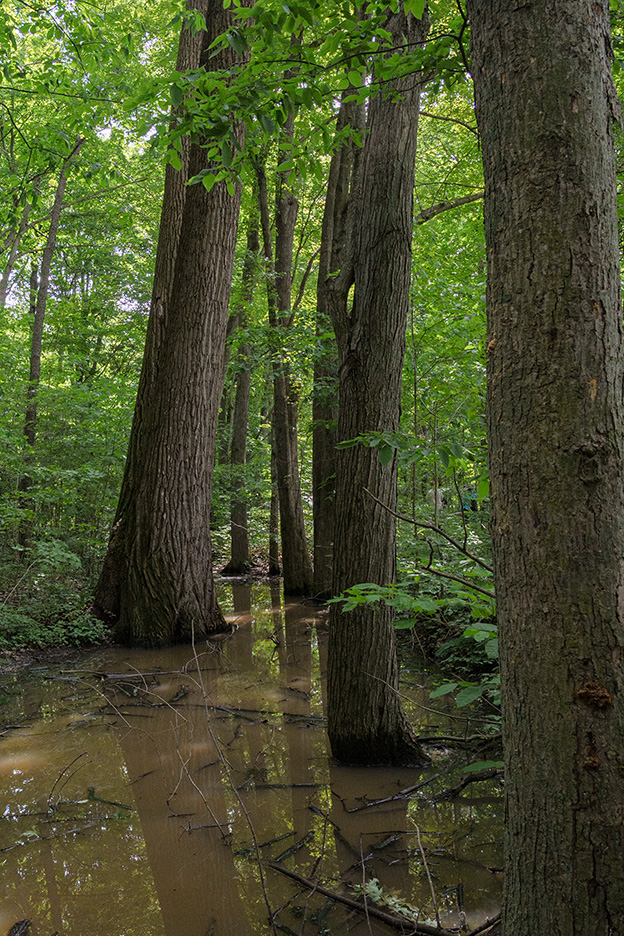
Forested Wetlands and the Great Black Swamp
Another wetland type that once occurred in our region was the forested wetland and flatwoods systems. These, too, are quite scarce today, though they persisted a bit longer than the wet prairies. Towering swamp white, bur and pin oaks, with their sprawling root systems, would certainly have slowed conversion. The abundant mosquito populations these forests supported likely gave early settlers further reason to move on. Some of these systems within the ACRES service area existed within the footprint of the Great Black Swamp. Clearing these areas became much simpler once an extensive network of ditches and canals was dug, and once cleared and drained, these, too, were converted to farmland.
How Restoration Works
Restoring both of these wetland systems begins, first and foremost, with restoring a site’s natural hydrology. Often, this can be accomplished in part by dismantling drain tiles and filling in existing drainage ditches. An added complication throughout the service area is the number of legal, or county-maintained, drains. These legal drains often serve dozens (or even hundreds) of other private landowners, and unless you’re at the very top of the drain’s watershed, it’s extremely unlikely you’d be able to restore your portion of the ditch to a more natural state or fully restore hydrology to what it once was.
Getting Creative: Thoreau Wildlife Reserve
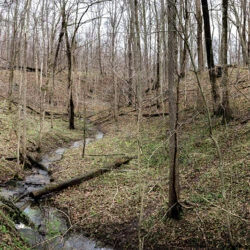
When working within the confines of a single property, we usually have to get creative. Sometimes this means diverting water from existing ditches and building berms and swales to retain it in new areas. That will be the case at the recently acquired and soon-to-be restored Thoreau Wildlife Reserve. Restoration plans are still in the works, though the vision is to return a large portion of the property to the forested wetland that once covered much of the county until the mid1800s. ACRES prioritizes protecting the remaining high-quality remnant communities within our service area, and we also recognize that, alone, that is not enough. To ensure that our water quality and biodiversity endure, we must continue to actively restore wetlands to the landscape.

Leave A Reply