
From Sap To Syrup
It started with an email in February 2020. ACRES Stewardship Director Evan Hill reached out to ask if I’d be interested in helping map and mark a new sugar bush — a grove of sugar maple trees — at Asherwood Nature Preserve.
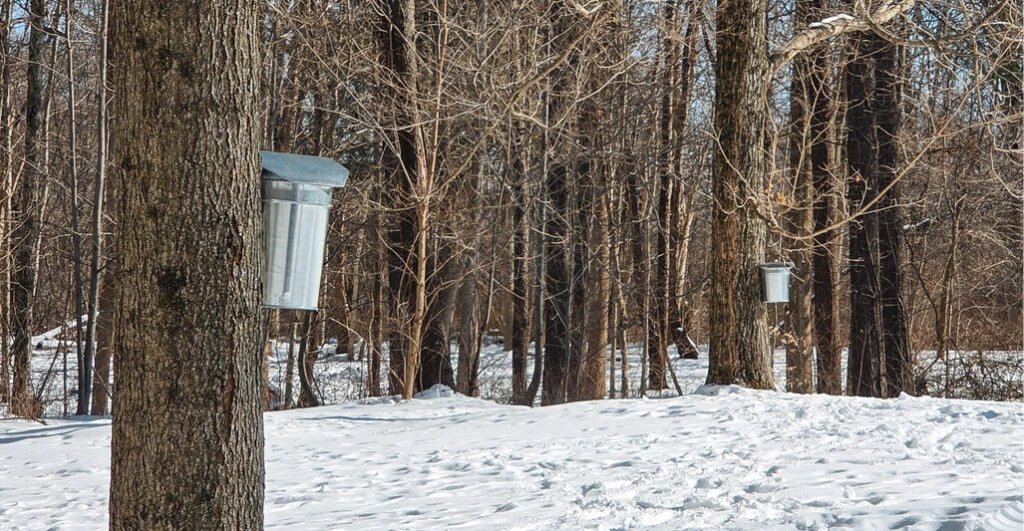
On an early spring morning, I met Evan and the preserve caretakers, Grady and Janelle Stout, at the property. Together, we located sugar maples throughout the woods, tagging each one before tapping it and hanging collection buckets. Some of those taps (called spiles) began dripping sap immediately. The Sugar Bug bit me!
Since that day, I annually come down with “sugar fever,” and thankfully, there is no cure.
The Process
Once buckets are hanging from the trees, they need to be checked and emptied regularly. The gathered sap is collected and transported to the Sugar Shack, where it’s boiled for hours in an evaporator. Springtime sap contains just 1-2% natural sugar, so it takes 40 gallons of tree sap to produce one gallon of maple syrup. At just the precise moment, the boiling sap transitions into syrup and you draw it off. Once enough syrup is produced, it’s bottled in the Science Center kitchen.
Indigenous people of the northeast are credited with discovering that maple sap could be processed into sugar. Early European settlers, with access to metal alloys and canning techniques, refined the process to create maple syrup as we know it today.
Daily sap production from each tree varies dramatically depending on weather and temperature fluctuations.
Honoring Tradition
Using historic methods from the turn of the 19th century, ACRES makes maple syrup using only sap from sugar maple trees. From how the sap is gathered to stoking the hand-banked wood fire beneath the evaporator to bottling the finished product, we follow traditional practices throughout.
The whole process begins in autumn with firewood production. The sugar season, when the tree sap is flowing and with the correct chemistry, begins in early spring and lasts for about a month. After bottling the final batch, we clean the equipment, dismantle what needs dismantling and perform any necessary maintenance before storing everything until next year.
2025 marked my sixth consecutive sugar-making season alongside the Stout family at Asherwood. As fall approaches each year, my mind wanders toward cutting and splitting firewood for the upcoming season. When will sugar fever hit me next….? Pass the maple syrup, please!
Leave A Reply