The Collaborative Effort to Save The Raymond Steinbicer Property
“The only way forward, if we are going to improve the quality of the environment, is to get everybody involved.” – Richard Rogers
What does it take to protect vital natural areas? It takes patience, persistence, and preservation. It requires research, planning, conversations, relationships, land to protect, property owners who want to make a lasting difference, and organizations with the means to help safeguard these spaces. Sometimes, this can happen quickly (especially during land auctions). In the case of our latest acquisition, this process involved a 40-year relay and three different organizations passing the baton to protect one of Indiana’s largest remaining contiguous fen wetlands.
A Discovery Decades in the Making
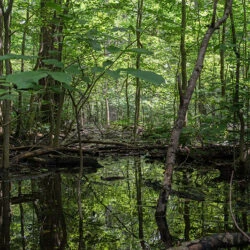
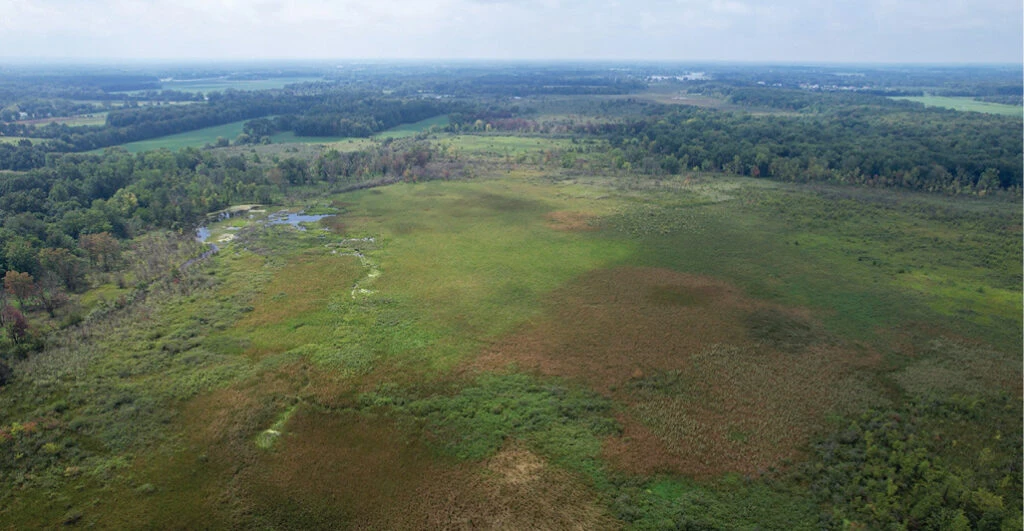
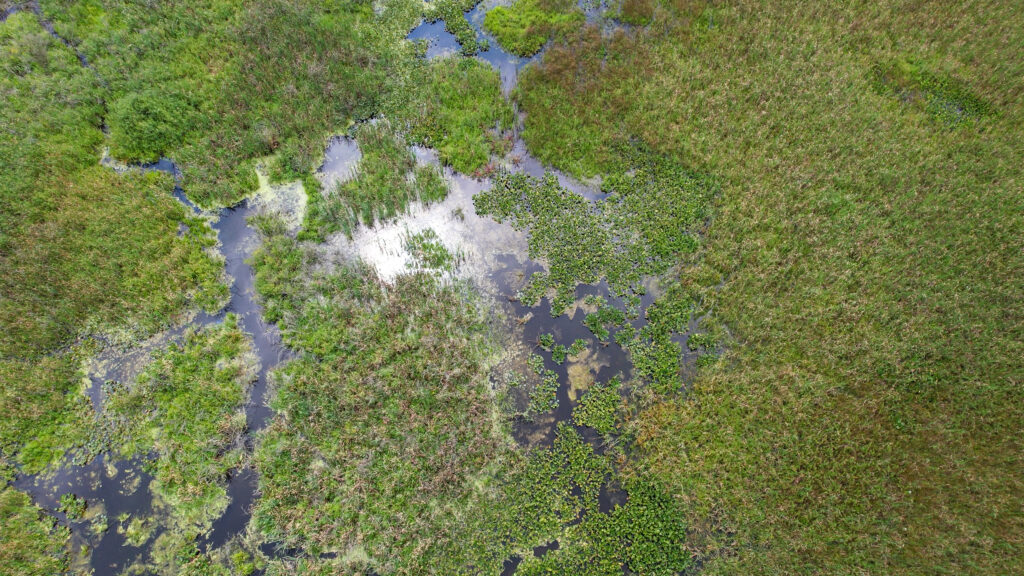
In the 1980s, the Indiana Department of Natural Resources conducted a natural areas inventory to identify high-quality ecosystems. After numerous flyovers of the state and a close examination of the photos taken during those flights, the project identified a large wetland complex in the northern portion of Elkhart County. Included in their findings was a fen, a rare type of wetland fed by mineral-rich groundwater that creates a unique habitat for plants and animals that can’t survive anywhere else. That was when conversations with Ray and Helen Steinbicer began.
Over the next two decades, employees from both DNR and The Nature Conservancy spoke with Ray and Helen about the significance of their land. From Jim Aldrich, who first visited the site in 1984, to conservation professionals Paul Carmony, Les Zimmer and Rich Dunbar, who all maintained contact with Ray, each wanted to see this place protected. Although they made multiple proposals for the permanent protection of this rare ecosystem, they could never finalize a deal before Ray’s passing in 2003.
For the next 15 years, the land passed through the family while biologists occasionally visited to study the unique ecosystem. The Steinbicer family kindly allowed these visits, but the future of the land remained uncertain.
Breakthrough
The email that changed everything came in March 2023. The Nature Conservancy and DNR saw an opportunity to finally protect this high-quality land and needed a partner that could move quickly. They knew ACRES had something special—the ability to act fast when nature needs help.
“We’ve been in this situation before,” Stewardship Director Evan Hill said. “In 2018, the DNR called us about a piece of land adjacent to Elkhart Bog that was heading to auction. We had just two weeks to secure the funding and make the purchase. After acquiring it, we transferred the property to the DNR for long-term protection.”
The 327-acre Steinbicer property sits just half a mile west of the already-protected 228-acre Elkhart Bog. This acquisition is one step closer to helping the state piece together these natural areas, allowing plants and animals—including rare and endangered species—to thrive across a more extensive, healthier ecosystem.
Understanding Transferable Properties
You might wonder how a land trust known for “protecting land forever” can purchase property it plans to transfer to another organization. The answer lies in ACRES three-tiered approach to land:
Nature preserves: This highest level of protection is for exceptional natural areas that often contain rare features or endangered species. These places remain forever wild, managed primarily to protect their natural values. These places are permanently protected and will never be sold, transferred, developed or divided.
Protected lands: These properties stay with ACRES permanently and include working lands like family farms, managed forests, tree farms, recreational areas and hunting/fishing properties. Properties given this status remain permanently protected and will never be sold, transferred, developed or divided.
Transferable properties: These are special cases that make up a small portion of ACRES work. Think of these as “helping hand” properties. Unlike our protected lands, these properties are acquired strategically to support broader conservation goals. When we acquire these lands, they aren’t offered protection, and we don’t plan to keep them forever.
Instead, we might:
- Hold them temporarily for another conservation group (like we’re doing with the Steinbicer property)
- Sell them and use the proceeds to protect other natural areas
Properties can move up this protection ladder but never down. Once protected, they stay protected. While this protection progression exists, most lands skip the “transferable” stage altogether and are acquired directly as Protected Lands or Nature Preserves.
“Unlike our forever-protected nature preserves that we will never sell or transfer, we purchased this property as a transferable land that we’ll hold temporarily, in this case, on behalf of a trusted conservation partner,” says Jason Kissel, executive director. “We’re grateful to our generous donors who make it possible for ACRES to be nimble in acquiring priority land in support of the conservation community.”
ACRES finalized the purchase earlier this year and will hold the property until the DNR secures funding to take ownership. After 40 years of patient work by multiple organizations, this special place is finally on the path to permanent protection, proving that persistence and teamwork pay off when it comes to saving Indiana’s natural treasures.